
Technology
Next-Generation Sequencing (NGS)
Industry-leading accuracy for chromosomal analysis.
PGT · Embryo Genetic Testing
Pre-implantation Genetic Testing screens embryos for chromosomal and single-gene disorders before transfer — boosting implantation, reducing miscarriage, and reducing risk of genetic disease.

Test types
PGT-A / M / SR
Biopsy stage
Day 5 blastocyst
Result time
10–14 days
Accuracy
98%+
Miscarriage drop
~ 50%
Implantation boost
15–20%
Overview
Pre-implantation Genetic Testing (PGT) examines a small biopsy of trophectoderm cells from a Day-5 or Day-6 blastocyst — without disturbing the embryo's inner cell mass — to detect chromosomal abnormalities (PGT-A), specific single-gene disorders (PGT-M), or structural rearrangements (PGT-SR).
Eligibility criteria we evaluate at the first consultation.
Higher rate of chromosomally abnormal embryos.
Two or more failed embryo transfers.
Two or more miscarriages — many due to chromosomal issues.
Beta thalassemia, sickle cell, cystic fibrosis, etc.
Higher rate of sperm DNA fragmentation.
Subject to local regulations.
PGT adds 4 steps to a standard IVF/ICSI cycle.
Standard stimulation, retrieval, fertilisation (ICSI preferred for PGT).
Embryos cultured to expanded blastocyst stage.
5–10 cells gently extracted from the trophectoderm — does not disturb the future baby.
Embryos frozen; biopsy DNA sent to certified genetics lab.
NGS (next-generation sequencing) for chromosomal analysis.
Only euploid (chromosomally normal) embryos transferred.
Our outcomes vs national averages.
Implantation per euploid embryo
60–70%
Single transfer
Live birth per euploid embryo
55–65%
Single transfer
Miscarriage reduction
~ 50%
vs untested
PGT-M accuracy
98%+
For known mutations
Individual outcomes vary. We provide a personalised prognosis at consultation.
Technology
Industry-leading accuracy for chromosomal analysis.
Technology
Precision micro-laser used to safely remove trophectoderm cells.
Technology
Cryopreserves biopsied embryos with > 95% survival on thaw.
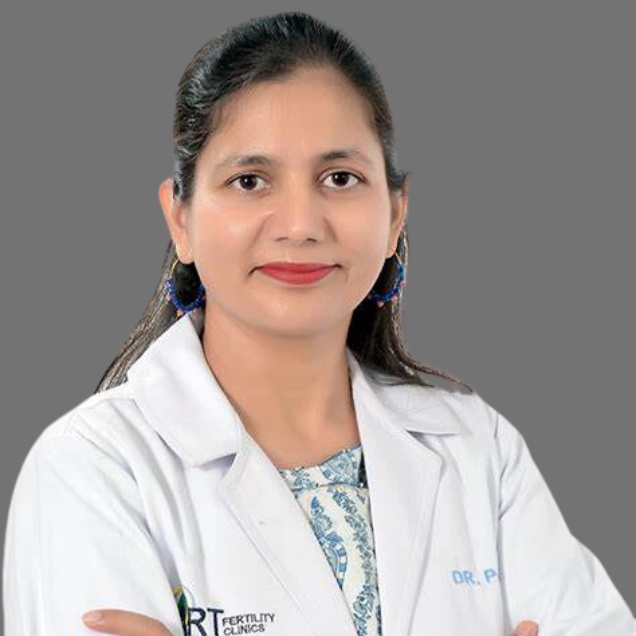
Meet your doctor
Senior IVF & Fertility Specialist · 20+ years · 5,000+ cycles
“After three failed cycles at another clinic, Dr. Parul re-investigated everything. Her protocol gave us our daughter, Aarna. She didn't just treat us — she believed in us.”
Priya & Rohan, Delhi
IVF after 7 years of trying
“We travelled from Suva. The team handled everything — visa support, accommodation, even translation. Our son arrived in November.”
Suva & Anish, Fiji
International Patient — ICSI
“I almost gave up. Dr. Parul's PCOS program changed my life — physically and emotionally. Forever grateful.”
Rahima, Dhaka
PCOS Fertility Program

Personalised In-Vitro Fertilization protocols with global success rates — designed around your fertility profile, not a template.
Intracytoplasmic Sperm Injection — a precision micromanipulation technique for severe male factor infertility and previous fertilisation failure.

Compassionate, anonymous, ethically managed donor egg, donor sperm and donor embryo programs — strictly compliant with Indian ART Act 2021.
A personal consultation with Dr. Parul Katiyar costs ₹2,000 — and clarifies more than a year of Googling.
Quick enquiry